Showing posts with label Cool. Show all posts

Monday, 4 October 2010

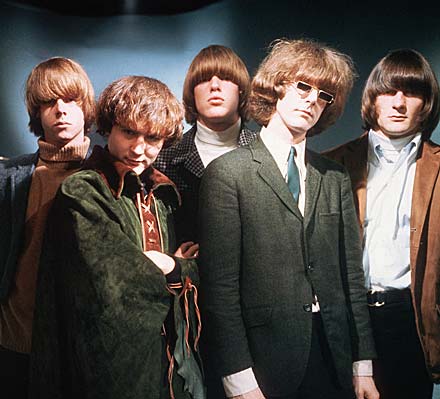
The Byrds in 1965

There's never been a band that looked as cool as The Byrds did in 1965, not even the VU.


Chris Hillman used to iron his hair straight for fuck's sake! Look how great it looked:


Here's his natural corkscrew curls. What dedication!

Wednesday, 18 August 2010

A Chambray Shirt

I mentioned yesterday that I don't own one and then today I run across this image:


I've seen it before, and I'm not saying I will look as cool as that, but the timing is almost Divine. "Go into the wilderness my child and buy a chambray shirt".

Should be lucky in the post summer sales hopefully.

Smart Casual


I love this picture that a friend posted on Facebook. It's just two middle-aged blokes looking bored having a coffee in a greasy spoon. It isn't their iconic status makes you look twice, it's the contrast in their 'looks'. Weller, for example, is affecting a fancy pocket square to go to a poxy café and- even if his tan and haircut are ridiculous these days- he still really looks the part and clearly he still tries. Noel has paired a chambray shirt (I still don't own one!) with some indigo jeans and a pair of Tokios and it works. I'd try too hard to wear that outfit, I still find it easier to dress smartly than casually. I'm much more Weller than Noel but oft times I wish it was otherwise.

Also, I think I'm going to grow my hair out into a Noel haircut. I think it's time.

Sunday, 17 January 2010

Federico Fellini’s 8½ (1963)

Having wasted time upon a dreadful film in Nine (and wasted more time banging on about it at length in my notes on here) I felt I owed it to myself to add my notes about the Maestro’s masterpiece here. Not that I would dream of comparing them in qualitative terms, 8½ is a thing of wonder and beauty; these notes are the befuddled ramblings of a halfwit.

In reality, the best summary of the film one could possibly hope to see is the opening scene. It may well be the finest opening scene in the history of film, though Once Upon A Time In The West must run it close. In any case the whole of the film is captured there- the constriction and claustrophobia, the seeking escape, the panic and fear, the oppressive voyeuristic outsiders, the relapse into the realms of fantasy the fleeting glimpse of freedom and the intervention of reality bringing the protagonist back down to Earth with a bang. That’s it: the whole film in a couple of mostly silent minutes.

It is, of course, a dream. The film begins and ends with a dream and throughout intersperses fantasy with reality so beautifully that you can be a couple of minutes into a scene before you realise that this is one of Guido’s (the protagonist, played by Marcello Mastroianni) daydreams. And isn’t that like life? How rarely in our dreams do we know that we are dreaming? And so we have a film director under pressure and struggling with a creative block trying to keep control of his tumultuous personal life and reconcile his own personal demons. It is an enormously difficult narrative to convey and one which Fellini does through the ingenious device of drawing the viewer into the film and sharing the confusion. Not only do we not know for certain what is a dream and what is real, but we often don’t know for certain who people are and what their role is until we have seen them two, three or even four times. Aside from flashbacks to Guido’s childhood, there is also very little exposition and scene setting. We are suddenly in the middle of it all and it is with no little irony that Guido is advised at one point “if you’re expressing confusion, do it more clearly so that people can understand”.

Much of the angst Guido experiences appears to come from the strictness of his Catholic upbringing and the way in which his personality brings him into contact with this. For someone such as I from a non-Catholic country and without that sense of oppressive guilt, this can be a tough thing to envisage and understand. Guido is advised that “there us no salvation outside of the Church” and yet there is nothing that the representatives of the Church offer him which is of any assistance with his struggle. Being told “He who isn’t in the city of God belongs to the city of the Devil” is no bloody use is it?

In making the film, Guido is trying to right the wrongs he has committed through his art and 8½ is in some ways an exploration of the conflict between knowing what one wants to do and actually doing it. Guido wants to make “a film to bury forever all those dead things we carry inside us”. It is an admirable sentiment; but one as futile and vague and inexplicable and unattainable as it is possible to imagine. And therein lies the key to 8½; we learn that you cannot repair a life by examining its faults, no matter how scrupulously. As Fellini (via Guido) sagely advises us “happiness is being able to tell the truth without making anyone suffer”.

Sunday, 10 January 2010

Mad Men

Just wanted to drop a quick note in about Mad Men, apropos of nothing really. I'm currently enjoying Season 2 and what prompted me to put my thoughts down here so that I don't forget was that towards the end of episode 5 I realised that as I watched I was grinning broadly. I laugh a lot but I rarely smile from enjoyment and yet something about this programme clearly hits deeply home. And yet I can't pin it down to anything specific.

After concluding Season 1 (watched in two long late-night stints) I had Season 2 on order and, for one reason or another, the dealer took a couple of weeks to get it to me. During that time I decided that it was important for me to take a break from it and come back to Season 2 afresh, that was in late Autumn of last year. I didn't think about it too deeply, I rarely do, just followed my instinct. With hindsight I realise that I was becoming spellbound by the show and it is happening again.

Intellectually, I could put up a pretty cogent and persuasive argument that Mad Men is one of the great TV shows I have ever seen. I love it for its intelligence, the fascinating thematic ground it covers (kudos too to Sloan Wilson's The Man In The Grey Flannel Suit; a great book), its confident pace, the razor-sharp deconstruction of a pivotal time in modern history, the tremendous performances and apparently simple yet devastatingly complex character arcs, the beautiful contrast between artifice and reality and for the spare but terribly profound writing.

But Mad Men's intelligence doesn't leave me grinning like that. No, I find myself beguiled by the stylised beauty of the piece. Vanity and an obsession with the aesthetics of the period make me a sucker for the programme. It isn't just the beautiful suits- and I do love how each man's stylistic taste is consistent throughout each costume, subtle but definite- or the stylish women, or the wonderful decoration, or the beautiful but much underrated score (why does no-one ever comment on the music in Mad Men? It is sublime). It is something bigger than all of those things and yet not separate from them.

But I can't quite say what it is yet. And it isn't the smoking- as attractive as that is in the absence of it's pungent acridity. No, if Serge's breathtaking Intoxicated Man didn't make me a smoker, nothing will.

The question remains, then. What is the power that Mad Men has to entrance me thus? Maybe I'll know when I reach the Season 2 finale. If not, then all my hopes lie with Season 3 which is months from screening here in the UK and I don't want to wait that long to learn the secret of my infatuation with the world's most beautiful TV show.


The picture of Peggy Olson, by the way, is there in place of the predictable Roger and Donald looking cool shot because her character's progress gladdens my heart. Feminist thought and progress of the period is a particular field of interest for me as it directly relates to my wife's Doctoral thesis. Although Peggy isn't especially likable, warm or attractive a character I'm behind her all the way.

Wednesday, 6 January 2010

Vertigo (1958)

There is something about this film, something in the atmosphere of it, which is quite unique. It isn’t quite dreamy and it certainly isn’t surreal, I’m guessing the best word is hypnotic. The film lasts about two hours but feels longer because it immerses the viewer within- it doesn’t interest or intrigue or engage me, it enraptures me. Everything contributes- the storyline with its twists and juxtapositions, the cinematography which somehow makes contemporary San Francisco look ethereal (and this isn’t the lustre added by the intervening years, I am sure), the performance of James Stewart with conflicting emotions of guilt and confusion and love and hope writ large across his brow, the direction which is confident, controlled and unhurried and finally- perhaps most importantly- Bernard Herrmann’s haunting score.


There is such a great deal of depth to ‘Vertigo’ that you really can find new things to consider with each watch. Here’s what I mean: watching this yesterday I was, for the first time, pondering the control that the male characters exercise over the female characters in their lives- Gavin Elster over Judy, ‘Scottie’ over Judy, ‘Scottie’ over ‘Midge’ and the unknown man from the bookseller’s story over Carlotta (his comment “they could do that back then” being ironic in that context). Juxtaposed with this are the supposed obsession with Carlotta which Madelaine portrays and the obsession with Madelaine which leads ‘Scottie’ to possess Judy. The film examines these relationships without drawing conclusions- these are left to the viewer- in each instance the man is rich and substantially older, the girl becomes a plaything or a means of passing the time, to be moulded and shaped in whatever image suits the man’s mood. What this says about patriarchal relationships for Hitchcock is unimportant, he posits the question for the viewer to consider without guiding those thoughts.

There are culture snobs who claim that cinema isn’t art. If Goya or Rembrandt created anything that betters Hitchcock’s ‘Vertigo’ then I’ll eat my hat. In fact I'll eat ten hats.

Monday, 4 January 2010

Take Ivy

I'm not a huge fan of photo-books, even less so when they're texted in indecipherable Japanese, but the legendary Take Ivy is the one I would love above all others. Reprints can sell for well over a grand, so I thought I'd never get to see the whole thing but a bit of Googling last night landed me on the whole thing scanned and uploaded by a smashing blog called The Trad. Wonderful stuff.

Chapter 1

Chapter 2

Chapter 3

This kind of look is readily applicable for the English Ivy fan, but surely he wants to keep his books dry too!

Monday, 14 December 2009

Performance (1970)

For a long time during my teens I nurtured a probably unhealthy obsession with Brian Jones the result of which has been a weaning-off process causing me to lock away my library of 'was Brian murdered?' books (of course he was) and avoid seeing this for the better part of two decades. Seeing Mick play- to all intents and purposes- Brian opposite the girl Keith stole from Brian was always going to be a bit weird. That the film is an almost total headfuck anyway, didn't help matters.

Performance could be the ultimate Emperor's New Clothes movie. It could be a trippy, surreal but ultimately vacuous exercise in style over content from which unintended layers of meaning and allusion can be divined. It could be Chauncey Gardiner as a film, I'm absolutely aware of that. But I'm going to follow my instinct that it isn't. And, furthermore, even if it is I'm going to say that the allegorical nature of the film is no less valid if it is unintentional anyway. Why should it be?

The film opens in the brutal world of London gangsters with Chas (an utterly fantastic James Fox performance) and we get about half an hour of a fast-paced gritty crime drama in the vein of Get Carter or Villain but then suddenly lurches head-first into a psychedelic acid nightmare full of "long-hairs, druggers, beatniks and foreigners" blurring the lines between reality and surreality. In exactly the same way that Chas gets discombobulated by what he experiences, so does the viewer. The resulting confusion is deliberate as the two worlds are shown as more similar than they are different. The integration of the two worlds occurs by allusion during the magnificent 'Memo From Turner' sequence and then in actuality.


The blending of identities and merging of entities is a recurrent theme. Chas and Turner, the hedonistic rock star in seclusion played by Mick Jagger, are increasingly shown as similar below their surface differences, they could almost be a masculine and feminine version of the same person. That duality is expressed in many ways; both literally (swapping styles of dress, superimposed faces etc) and by suggestion ("there's nothing wrong with me...I'm normal"). In fact the whole film investigates this identity confusion: there are mirrors and juxtaposed faces, picture disappear from frames between shots, sexual confusion, androgyny, altered perceptions, sanity and insanity, domination and submission, appearance changes and role swapping. Throughout the gangland scenes the phrase "it's not a takeover, it's a merger" is repeated and, in the end, we are presented with the surreal merging of people- Turner becomes Lucy, Chas becomes Turner, Turner becomes Chas. This bizarre distillation of Borgesian confusion is both challenging and illuminating.

As a film, as a piece of entertainment, I would imagine that Performance might be considered a failure. There is no obvious hero or villain, no linear narrative, no clear outcome and the performances range from Fox's coruscating portrayal of Chas to Pallenberg's patchy and uneven Pherber. As a work of art, however, it is outstanding. And the soundtrack is incredible.

And- finally- everyone should own a copy of Happy Mondays' Bummed which samples this film's dialogue heavily.

Monday, 7 December 2009

Stranger than Paradise (1984)

What I absolutely love about Jarmusch films is the fact that he shows bored people doing nothing and it looks so fucking appealing. Way before the Richard Linklater/Kurt Cobain/Grunge slacker fad of the 1990s, Jarmusch was filling the screen with slacker icons. Only in way cooler threads.

I watched Down By Law for the first time the other day and, reviewing the storyline on here, used seven words. This film takes nine: three people drift together, drift around then drift apart. The narrative idea- to take a staple dramatic device (chancing upon a stash of criminals’ cash and taking it) and place it at the climax rather than the outset- is interesting but downplayed. Plot is not important here.

There are lots of still, silent shots of people sat doing nothing. It is a beautiful film of dull subjects. The mundanity of the protaganists’ lives, their lack of direction or aspiration is writ large. If I could have anyone make the film of my ridiculous, nondescript life I’d want a Jim Jarmusch film. His style and vision would make the rundown, grime of West Bromwich look like the place it still is in my head.

The main character of the three Bela/Willie is played beautifully by John Lurie. He looks great, like Belmondo in ‘À Bout de Souffle’, but his hipster style is betrayed by his bemoaning the repeated airings of Screamin’ Jay Hawkins’ ‘I Put A Spell On You’. The style is superficial, it doesn’t matter to him. Nothing does. This is reinforced by the aping of his style by Eddie (Richard Edson) he wants the look to be like Willie, but he’s not like Willie. The third main player is Eva, a recently arrived Hungarian emigree, played by Eszter Balint. She is the coolest of the three, but that’s no great praise really. She looks square but is a bit more self-assured (though this is only once acknowledged, by Willie when she’s- presumably- shoplifted some groceries) while the other two protagonists look cool but lack any verve or drive.

Stylistically, thematically, visually this is a classic. The character arc I’d have hoped for doesn’t happen though- a fucking shame.

Tuesday, 1 December 2009

Down By Law (1986)

Entirely by chance, the second film I watched this evening was contemporaneous with the first (Howard the Duck). I’m not sure that I can think of another similarity between the two. And that is the wonder of this film in a nutshell. This film is excellent because there is nothing here that there should be in a conventional movie.

The plot is as follows: three men are imprisoned together and escape. That’s it.

You don’t even see how they escape, one of the guys says that he has thought up a plan and in the next scene they’re free. The most dramatic part of the story happens off-screen. It doesn’t matter how they did it, after all, all that matters is that they did. The film is about how they feel- a dramatic Steve McQueen motorcycle jump would have been superfluous.

This film isn’t episodic, dramatic, exciting, colourful, full of surprise twists or complex snappy dialogue. The trailer must’ve been a bitch to cut because for long periods literally nothing happens. Tracking shots or silent footage of characters ignoring one another set to a gruff musical soundtrack take up a huge proportion of the film. There are three lead characters and one barely appears until about halfway in. They are very real and grounded characters in a fearful situation desperately trying to hide their fear. They don’t like each other, they don’t really learn to get on, they don’t especially develop, Jarmusch simply allows the audience to gradually share their deeper emotions. A great director placing his trust in the actors, giving them time and space to deliver: it is a marvel of understatement.

The intelligence that shines through repeatedly (the first example that springs to mind is the shack that the three men find following the jailbreak being a replica of their shared cell) isn’t self-indulgent or self-serving, but delivered with warmth.

This is a dark, slow, visually striking, engaging, atmospheric and thought-provoking modern day fairytale. A real feast.

Sunday, 29 November 2009

The Good, The Bad and The Ugly / Il Buono, Il Brutto, Il Cattivo (1966)

gbu11

This is going to be brief because I'd already posted a full 10/10 review but it has disappeared.

Last night I went to a rare-as-hen's-teeth big screen showing of this. There were seven people in the cinema watching it. Seven.

Last year I saw a fight break out as people queued to get in to see Slumdog Millionaire. The show had sold out but these people already had tickets, they were fighting just to get into the theatre first and get the best seats.

There are people I know who would be thrilled by this. They want the best films and music and books and TV shows to be exclusive, secret, their own personal property. I'm not of that mindset at all, I want to share The Good, The Bad and The Ugly with everyone. I want people to develop the same love and respect and admiration and sheer exhilaration that I do for it. I can't tell you how excited I was for the whole day knowing that I would be seeing this that evening.

Leone's direction of The Good, The Bad and The Ugly is masterful. Everything about it. I love the patient way that the scene is set for each event, the build-up being far more important than the set-piece itself. The extreme close-ups on the eyes of the protagonists, the silence, the tension. This is going to sound embarrassingly pseudy but what the fuck, I believe it. Leone's direction here reminds me of a big cat stalking its prey. It moves slowly and gradually, sinews tensed, eyes alert, silently, stealthily awaiting the perfect moment and then in an instant the violence is over. In that way Leone is the opposite of Peckinpah whose violent scenes are extended as far as possible with repetitions from multiple angles and slow-motion sequences. Where Peckinpah invites the viewer to gorge on the blood and destruction, Leone despatches it as quickly as possible. For Leone, the act is trivial in comparison with the circumstances surrounding it- eyes filled with fear and determination, quivering hands poised to draw- and what is behind that. Much as I love Peckinpah's great westerns, Leone's approach is better.

I must have seen this fifty times and (aside from some unglued make-up on Clint's dehydrated neck and the ropey title sequence) I can't find a flaw. Brilliant, beautiful, brutal. 10/10

thegoodthebadandtheuglycollectorsset1

Thursday, 26 November 2009

Made in U.S.A. (1966)


During this film the phrases “a Disney film with Humphrey Bogart” and “a Disney film with blood” are used. And you can see what is meant by that. This is super-stylish and, like all of Jean-Luc Godard’s finest films, mixes the personal and the political into a simple yet complex take on Film Noir. The simple yet complex theme is evident in the dialogue as well as the construction of the film.

Godard’s work at this point seems far more overtly political than his earlier films and is almost an expression of his doubts and uncertainties with regard to left wing politics and how they can be reconciled with contemporary society. There are overtly political visuals (the grafittied- there’s no right way to spell that is there?- phrase Liberté gets machine-gunned) and dialogue (political tracts recounted by tape recorder as a clue in the case). As an expression of what was happening in the world in general and France in particular (the Paris student riots were about two years away) Made in U.S.A. shows Godard to be both a product of and a leader of his times.

And it is, of course, an homage to the American B-movies that Godard references throughout. If not made, this film was certainly conceived in the USA- if a country can also be a state of mind and I’m not getting all up my own pseudy arse with this! The film features Anna Karina tracking down the murderer of her ex-lover. The murder was the result of his involvement in or at least knowledge of a political assassination. Karina, as was mentioned above, is a contemporary version of Bogart’s noir persona- uncompromising, hard-headed and thoughtful. She is being tracked by a criminal and his callow, hapless accomplice (much like Wilmer Cook in The Maltese Falcon). As far as a linear plot goes, that’s your lot. Non-linear plot elements are the constant pop-culture allusions, the tape-recorded monologues on the French political situation and a discussion on perspectives and how they shape our view of the world.

Being a Godard film, of course, it looks marvellous- the constant juxtaposition of stark white internal scenes with bright primary colours, the beautifully lit exteriors which seem so fresh, the long fixed-lens close-ups, the reflections of Karina barely visible in a photograph frame behind the head of the subject, the twins in the gymnasium- his visual inventiveness is indefatigable. And it sounds marvellous, with real-life intervening in the form of sirens, telephone rings and overhead planes. The influence of all of this on Quentin Tarantino’s Kill Bill films is obvious (the basic storyline, Karina’s appearance, the name hidden by a sound effects etc) and is further testimony to the power of the film to extend beyond itself and take on an importance beyond merely being a piece of cinematic art. There is a scene where Karina and László Szabó sit down and describe what happens in the next part of the film rather than acting it out- this constant deconstruction of the cinematic myth (the dialogue constantly talks about movie scenes, characters, events, the mise-en-scène- hell even the characters are named after actors or directors) serves to remind us that Godard is making statements that go beyond the simplistic storyline. The story is not what the film says, it is merely a vehicle to express the director’s statement. Has the auteur theory ever been supported in so stark and blatant a way?

This is a film that needs to be seen and re-seen for things to make sense. Of course the whole thing could be a vacant pop-culture act of pretension like Antonioni's Blow Up, but I don’t believe so.

Thursday, 29 October 2009

À Bout de Souffle (1960)

The intention I have behind these notes is to remind myself what I loved and hated and didn’t understand and wanted to remember about these films. As such, this note is superfluous- I love this film and know it frame by frame. Funny how a film that has been imitated to death and is almost fifty years old can still seem fresh and invigorating. Unlike most of the films I watch, I’ve read a bit about this one. I know, for example, that the spliced sequences on the Champs, in the taxi, in the bedroom, on the ride into Paris were a financially-motivated innovation. I know that the sirens which drown out dialogue were retained to avoid wasting film. It doesn’t matter, though, they work as representations of reality and as artistic statements. The whole thing works.


Michel Poiccard (Jean-Paul Belmondo)’s opening line “After all, I’m an arsehole” sets the tone beautifully. From there he embarks on a crime-spree that is motivated neither by malice nor desperation, but because it is his default setting. He is immune to remorse. From car theft to extortion to mugging to the murder of a policeman he doesn’t hesitate and doesn’t bat an eyelid. He is amoral and thoroughly ambivalent to society moving instinctively according to his code “informers inform, burglars burgle, murders murder, lovers love”. Indeed he even considers the love he has for Jean Seberg’s Patricia to be something to regret. He is just a mixed-up kid, aping Bogart and playing at life. To Michel we are what we are by nature and we simply have to follow our course without deviation, to him it is that simple. He speaks of his love for and disdain for France and the French and Americans and other things, but the words ring hollow. Belmondo speaks these sentences whilst emoting others (he really gets behind “never use the brakes. As old man Bugatti used to say ‘I build cars to run not to stop” and you can see that ‘run not stop’ ethos lives within him throughout the film). When Godard positions him in front of a poster that shouts ‘live dangerously until the end’, Michel’s raison d’être is encapsulated in a moment. Building the film around a character as reprehensible as Michel Poiccard (strip away Belmondo’s charm and what’s left isn’t pretty) would have made for a very difficult and perhaps shallow viewing experience- indeed the storyline can probably be comprehensively summarised in a sentence. This is why Patricia is so important. She too is a mixed-up kid, she too has a kind of dubious morality and she too offers platitudes and opinions without conviction, but she is redeemable and fundamentally good whereas Michel is fundamentally rotten. Her emotional wrangling (“I don’t know if I’m unhappy because I’m free or free because I am unhappy”) is an important counterpoint to Michel’s animal instinctiveness. Her role is also important as it permits Godard to question such things as the female role (French feminism at this time was a vital political force), infatuation, mortality, love and sensuality and- perhaps most importantly- predestination and happiness. On a philosphical basis, there is a tremendous amount in À Bout de Souffle to consider.


The thing which I love about À Bout de Souffle probably more than any other film, though, is its cool. I know that it’s childish to label something cool or even to love something because you think it’s cool but I don’t care- maybe I’m just a mixed-up kid too! The look of the film whether by pragmatic inspiration or design is, there’s no other word for it, breathtaking. Jim Jarmusch- who I love dearly- built a career on this stuff. The whole film is shot on a hand-held and allows Godard and his cinematographer Raoul Coutard (the only men involved in shooting the film) to focus in on faces and follow them around- there is a marvellous scene in the Travel Agents as they firstly follow Michel as he approached the desk, then Michel and Tolmatchoff (Richard Balducci), then Michel again and as he leaves we follow the arriving Detectives as they repeat his journey just a step behind him. The film also utilises high-angle shots from rooftops and balconies showing Michel and Patricia in the context of the busy city. Their story is at once immediate and yet one of many thousands of stories. Another aspect of the spliced scenes is the insistent urgency that they give the story, along with the great jazzy soundtrack- and in particular the piano/trumpet refrain- by Martial Solal, a real zest and vigour. I honestly can’t speak highly of this film, I love it in more ways than my paltry descriptive powers will allow me to express. It means the world to me.

Tuesday, 27 October 2009

Finally Sunday! / Vivement Dimanche! (1983)

"so sweet and touching a love letter to Hitchcock"

I've got such a list of films that I haven't made notes on that I'm having to rattle through them at great speed. I'm not even going to mention Jules et Jim, which I saw recently and again at the weekend. I think I've got the balance right but I do find my notes useful, so it's a shame. I saw Jules et Jim because speciality French movie channel CineMoi had advertised a showing of Vivement Dimanche! but decided to show the 1962 classic instead. I started watching and couldn't stop but I couldn't help being miffed as I'd missed the chance to see the one Truffaut that I haven't seen and don't own and then a little digging revealed that I do own it! It was released in Australia as Confidentially Yours, though having seen the film I can't see why, and was part of a box set I picked up some years back. So, I got to see a Truffaut double-bill. "Who's the Daddy now?"

This is smashing. It is Truffaut working through his Alfred Hitchcock fixation (the Hitchcock/Truffaut interviews make fantastic reading) by making a perfectly-executed homage. This being a (pseudo) Hitchcock it revolves around a man who is accused of a crime that he may or may not have committed and his attempts to elude the authorities for long enough to clear his name. It's suspension-of-disbelief time of course, this is a film where the police have set up road-blocks and search the city for a man who is sat comfortably in his office which they've neglected to check. But it doesn't matter, the film is so sweet and touching a love letter to Hitchcock that you can let anything go.

Jean-Louis Trintignant plays the innocent victim of circumstances- by turns confused, afraid and indignant- with the glorious Fanny Ardant as the secretary who is secretly in love with him and does his investigating for him whilst he is ensconced in the office (a nice nod to Rear Window). Both are excellent and their chemistry is lovely to watch.

But it's the Hitchcock motifs that matter the most. The film is immediately suspenseful from the shooting of Massoulier which opens and is undercut throughout with a tense string soundtrack which is tremendously reminiscent of Bernard Herrmann's best. There are images of telephones ringing in empty rooms, scenes shot from outside through windows, the first person the couple suspect is dramatically revealed to be a Priest, Fanny Ardant's Barbara zips from city to city looking for clues, she witnesses a murder but can only see the murderer's legs, the audience is manipulated to believe then disbelieve then rebelieve in Trintignant's character...

I don't believe that this focusing upon the Hitchcock angle is doing the film down at all, it is certainly a tense but enjoyable thriller in its own right and the reverence it shows for the Godfather of all modern thrillers is a strength. There is also a brief reference to Kubrick's Paths Of Glory- a film which was once banned in France- and, as this was to be Truffaut's last film it is almost as if he is saying goodbye and expressing his thanks to great filmmakers from before. Like when Bob Dylan played 'Song For Woody' at his 40th Anniversary tribute concert.

It's far from flawless but I loved it. Can't wait to see it again. 7/10

vivement_dimanche

Monday, 14 September 2009

Goldfinger (1964)

Goldfinger

I genuinely think that this is one of the best films I've seen. I go back to something that I often harp on about- a film must be judged against its aims and Goldfinger has lofty aims which it exceeds. The third Bond picture followed the excellent From Russia With Love and deliberately raised the stakes from that early high-spot. The intention is to retain the levels of intrigue and to increase the wow factor with a bigger budget used wisely.

Connery returns again as Bond in a serious, steely mood- there is a spite behind his wisecracks throughout- and, for me, his third performance in the role is his best. By his fifth he would have relaxed into sleepwalking through the films for cash. And his iconic status here is assisted by the direction of Guy Hamilton (pipping Martin Campbell as the best of Bond's directors) who achieves the double intention of making Bond credible as a thriller hero and yet incredible as an unflappable superman.

goldfinger2

The film- like The Great Escape which I watched a few weeks ago- is more than a mere film these days, it is a huge part of our cultural fabric. And, with that in mind, it's hard to ignore the significance of Oddjob, Pussy Galore, the Aston Martin DB5 and "no Mr Bond I expect you to die". But doing that and judging this solely on its own merits it still stands up. It is fantastic entertainment; tightly scripted, well acted in the main with compelling memorable characters, hilarious dialogue- "shocking, positively shocking", "no mister Bond, I expect you to die", "I must have appealed to her maternal instincts", "I have a slight inferiority complex" and a great interaction between Bond and his allies M, Q, Moneypenny and Felix Leiter.

I honestly love it. Everyone does don't they? 10/10

Goldfinger 4

Saturday, 25 July 2009

Faster, Pussycat! Kill! Kill! (1965)

faster-pussycat-kill-kill

What I love about exploitation movies is their sheer economy. Low budget film-making requires innovation and a clear idea of what film you're making and for who. Russ Meyer made 'Faster Pussycat! Kill! Kill!' for boys who want to see action, sex and fast cars- now I'm not strictly part of that demographic, but this movie is so effective in what it does, that even I was hooked.

The ruthless way in which the film shows exactly what is required to pack a punch and no more, it is visceral and energetic. There are goofs all over the place- licence plates fall off and appear back in place and the state of the actresses clothes varies wildly- and some of the performances are really ropey, but the film also has real strengths. Tura Satana's pneumatically chested sociopath is truly iconic, Stuart Lancaster as the old man is lascivious and irredeemable and Lori Williams as Billie- while being by no means consistent- shows moments of real promise. More importantly Meyer's slick editing and Jack Moran's high-camp dialogue are memorable indeed. So, great title, great script, great direction and a great title song. Superb.

I often remark that a film can only be judged by how well a film achieves its own aims, on that basis it gets a full 10/10. I don't like this being ranked alongside something like 'Aguirre', though, so I'll bend my own rules- 9/10.

Sunday, 28 June 2009

The Great Escape (1963)

great-escape-title

With Elmer Bernstein's Western-style theme tune, a name like The Great Escape and those big fuck-off red titles you know where you are with this from the start. It's a bombastic, unsubtle, flag-waving crowd-pleaser. There'll be no ambiguity or equivocation here. This is a regression to childhood; the Allies are Dennis the Menace, Bart Simpson, Winker Watson and Kevin McAllister while the prison guards are their hapless parents and teachers. And that also tells you what this isn't, this is by no means a serious historical document. It very well may be a dramatisation of a novelization of real events, but that's like relying upon a blurry photograph of an artist's impression of a bank robber to identify a suspect. No, whatever the titles may have you think, this is a fantastical exercise. Of course, that's not a criticism- it's a defence. Critics of the lack of authenticity in this film really should avoid cinema as a medium of entertainment.

What you can justifiably put the boot in about is the almost total lack of plausibility- the claustrophobic tunnel-digger, the blind forger, the American flier in chinos and a sweatshirt who got shot down clutching a baseball mit, James Coburn's dreadful broad Orstrialiurn accent, the secret still that even the prisoners can't find which produces enough moonshine for three hundred men... It just depends how far you're willing to suspend your disbelief. Me? Well, in the right mood I'll accept it- even if it does make being a prisoner of war look like more fun than a night out with Keith Moon.

But whether it's any good is the most important question and, well, it's okay. It's the best part of three hours long and there only a few dull passages- for example, the first half hour seems to fly by with all of the characters being introduced in turn, but the next half-hour on the complexities of hiding different coloured dirt and how to get a camera out of a prison guard drag. What's more the sheer volume of characters makes it a challenge for John Sturges to introduce them all- giving Cavendish a scarf and Henley a polo-neck may help us distinguish between them but that's no use if we don't know which is which. And that's the best thing about the film, the clarity of characterization. God only knows what kind of a challenge it must be keeping such a huge cast of star egos happy with their screen time while keeping the film under five hours long. Sturges does that really well here. Whoever is directing The Expendables will find that out for himself soon enough.

greatescape-2

The next best thing about the film is linked with that. The next best thing about the film is Steve McQueen. Okay, I'm biased, I love Steve McQueen but he is genuinely the most watchable thing on show here. It isn't his acting, which is competent enough, it is his charisma and sheer screen presence. I suppose the fact that he is swaggering around in what looks like his own clothes and had the whole iconic motorbike sequence added just because he likes motorbikes helps. John Sturges, deliberately or otherwise, just lets him stroll onset and steal the film from everyone else. No-one remembers Charles Bronson and John Leyton rowing away at dusk in beautiful soft-focus, but everyone remembers the motorcycle jump. I suppose that means that Sturges's decision to humour him paid off, even at the cost of completely overbalancing the film.

Despite the best efforts of arch overactor James Garner and dear Dicky Attenborough, Donald Pleasance is the only man who comes close to McQueen when it comes to creating a memorable character. He is thoroughly lovable, a perfect English gentleman designed for Hollywood consumption. Splendid.

What is most usually overlooked about The Great Escape is the amount of time that is spent on largely unsuccessful post-escape events. The Elmer Bernstein theme and the very phrase 'great escape' represent- in the minds of the majority- Allied supremacy over Nazi tyranny; like the Dunkirk evacuation or Custer at the Alamo or even Balboa's first tilt at the world title, glorious failure is much more memorable than mere success in Hollywood's estimation.

So it's mostly crap, but enjoyable, iconic, quotable crap that everyone needs to have seen to understand the intercontextual references that appear in countless other books or films or songs or TV shows. The Great Escape is far more than just a film, it is a part of our cultural heritage. 6/10

great-escape-3

Tuesday, 16 June 2009

Dark Victory (1939)

dark_victory

I cried. I cried myself to sleep after I saw this.

That means it works and it also means that I'm not going to say too much about it. Bette Davis, full of life and vigour as the doomed Judith Traherne, is exceptional in this. Now I love Bette at the best of times, so a film designed to showcase her talent to the full is always going to appeal to me. So what if the elements around her aren't quite right? Bette shines in Dark Victory, she positively radiates.

George Brent as Dr Steele lacks charisma and there isn't much chemistry between him and Bette, in terms of on-screen partnerships the key scene between Bette and Bogey is a comparative sizzler. Brent actually clicks pretty well with Geraldine Fitzgerald (as Ann, Judith's closest friend) and it all just seems a bit of a shuffled pack. Not that I could see Brent playing the Bogart role , nor Fitzgerald replacing Davis at all! Bogey plays the trainer of Traherne's horses, a sometimes Irish man called Michael O'Leary- I say sometimes because he occasionally has an Irish accent but usually doesn't- and his job is to look a bit rough and to take no shit. He does the role okay but has still not quite grown from actor to star yet. Bogart's big scene with Davis is great but aside from that he, like everyone else on screen, is little better than wallpaper. On the bright-side, this comparative invisibility amongst the support players meant that I didn't get to notice and be infuriated by Ronald the Ray Gun. A mercy. 7/10.

dark_victory_trailer_group_shot

Tuesday, 24 February 2009

In Like Flint (1967)

I watched Our Man Flint recently and really enjoyed it and here we have the archetypal sequel: what it lacks in freshness and originality it tries to compensate for by lowering the bar. The acting is hammier, the gags are more obvious, the storyline is more outré and the whole thing is dumbed down to ensure the broadest possible appeal. And it is enjoyable, just a little regrettable.

One of my favourite things about the Flint films are the inventiveness of the writers in coming up with Flint's abilities. The best that we get here is when he is writing a dolphin dictionary- a feat which enables him to speak to a dolphin and gain its assistance in penetrating the enemy lair. It is almost as if the concept is funny enough without the extra effort which made the first so special- the gadgets from last time (especially the hearing equipment in the shirt) are missed here and although the 73 function lighter- 74 if you include lighting a cigarette- survives its usefulness is downplayed.

Even James Coburn seems to have lowered his aims with this one, he played the first film straight- as all the best comedy is- but here he starts mugging for the camera. It's a real shame as Flint on the one hand and Harry Palmer on the other provided a really strong counterpoint to the Bond films and, in the absence of Coburn's comic alternative, they were able to become ludicrous self-parodies themselves.

Another regrettable disappearance is the antagonism between Flint and Lee J. Cobb's Lloyd Cramden. Their spiky relationship in the first film was an interesting layer to the film however Cramden, who had found Flint's abilities no compensation for his disdain for authority last time out, simply fawns over Flint this time. The only interesting thing Cobb has to do this time is to wear a dress and shave off his moustache. A waste.

in-like-flint

The storyline takes Flint to Death Valley, Moscow, the Virgin Islands and Outer Space (Bond would be 13 years behind him) but the sets are unconvincing and the whole thing has the naff cheapness of a budget sequel. You can see the series heading down the Escape From The Planet of the Apes route and perhaps it's for the best that this film wasn't followed up. The closing sequences see a battalion of nubile girls attacking a military colony on a flotilla of pedaloes- like the Dunkirk evacuation filmed by Russ Meyer- and the leaders of the female-only organisation who were trying for world domination conceding that it's best to let men run the show. Outdated that surely, even in 1967!

And so this is a disappointing sequel and the death knell of a series not yet out of infancy. Entertaining, campy but crap. 3/10. Mind you it was at least prescient- if only more Americans had shared Flint's disdain for the notion of an actor as President.

Monday, 9 February 2009

Performance (1970)

For a long time during my teens I nurtured a probably unhealthy obsession with Brian Jones, the result of which has been a weaning-off process causing me to lock away my library of 'was Brian murdered?' books (of course he was) and avoid seeing this for the better part of two decades. Seeing Mick play Brian- to all intents and purposes- opposite the girl Keith stole from Brian was always going to be a bit weird. That the film is an almost total headfuck anyway, didn't help matters either.

Performance could be the ultimate Emperor's New Clothes movie. It could be a trippy, surreal but ultimately vacuous exercise in style over content from which unintended layers of meaning and allusion can be divined. It could be Chauncey Gardiner as a film, I'm absolutely aware of that. But I'm going to follow my instinct that it isn't. And, furthermore, even if it is I'm going to say that the allegorical nature of the film is no less valid if it is unintentional anyway. Why should it be?

The film opens in the brutal world of London gangsters with Chas (an utterly fantastic James Fox performance) and we get about half an hour of a fast-paced gritty crime drama in the vein of Get Carter or Villain but then suddenly lurches head-first into a psychedelic acid nightmare full of "long-hairs, druggers, beatniks and foreigners" blurring the lines between reality and surreality. In exactly the same way that Chas gets discombobulated by what he experiences, so does the viewer. The resulting confusion is deliberate as the two worlds are shown as more similar than they are different. The integration of the two worlds occurs by allusion during the magnificent 'Memo From Turner' sequence and then in actuality.

performance-still

The blending of identities and merging of entities is a recurrent theme. Chas and Turner, the hedonistic rock star in seclusion played by Mick Jagger, are increasingly shown as similar below their surface differences, they could almost be a masculine and feminine version of the same person. That duality is expressed in many ways; both literally (swapping styles of dress, superimposed faces etc) and by suggestion ("there's nothing wrong with me...I'm normal"). In fact the whole film investigates this identity confusion: there are mirrors and juxtaposed faces, picture disappear from frames between shots, sexual confusion, androgyny, altered perceptions, sanity and insanity, domination and submission, appearance changes and role swapping. Throughout the gangland scenes the phrase "it's not a takeover, it's a merger" is repeated and, in the end, we are presented with the surreal merging of people- Turner becomes Lucy, Chas becomes Turner, Turner becomes Chas. This bizarre distillation of Borgesian confusion is both challenging and illuminating.

performance

As a film, as a piece of entertainment, I would imagine that Performance might be considered a failure. There is no obvious hero or villain, no linear narrative, no clear outcome and the performances range from Fox's coruscating portrayal of Chas to Pallenberg's patchy and uneven Pherber. As a work of art, however, it is outstanding. And the soundtrack is incredible- 9/10.

And everyone should own a copy of Happy Mondays' Bummed which samples this film's dialogue heavily.

bummed