You have to have an opinion on the finale I suppose.
It's too obvious that the guy in the Members Only jacket went to the toilet like Michael Corleone and then whacked Tony. I think that was the ultimate red herring. The point was that when Michael did it, the last thing in the world that it could be accused of being was obvious. If you think that the likeliest guy in the place doing what the unlikeliest guy in the place did is some kind of homage, then to me you're barking up the wrong tree.
That's not to say I liked the ending, I thought it was less intelligent and clear than everything that went before it. Chase was trying too hard to be mysterious. The beauty of using symbolism is that you only need to reference one thing, referencing ten misses the point.
Still thought it was a magnificent series, though. Second only to Mad Men.
Showing posts with label Art. Show all posts
Monday, 27 December 2010
Sunday, 31 October 2010
Tom Eckersley And The Joy Of Discovering Something New
When I was looking for an appropriate picture for my last blog post 'Tidy', I found a smashing illustrated 'Keep Britain Tidy' poster to use. I was so pleased with it that I did a bit of digging about it. The guy who designed it is named Tom Eckersley and he was fantastic. I love his work, here are a few examples that will show why:
Friday, 17 September 2010
The Final Frontier
Following on from reading up on The Fermi Paradox, I was (totally coincidentally) sent a link to some amazing space photographs in The Boston Globe. Here are some of my favourites made small for the blog, get on the link and see them in all their glory!


Saturday, 28 August 2010
The Secret In Their Eyes / El secreto de sus ojos (2009)
Managed to get to see this last night and, thankfully, knew basically nothing about it besides it beating the fantastic White Ribbon to the Best Foreign picture Oscar. I was truly blown away. It was hilarious and touching and beautiful and affecting. I'm not going to try and go into why like I used to, I haven't the time, but it is one of those rare films that moves you into a new paradigm and stays with you long afterwards.
Wonderful.
Wonderful.
Sunday, 20 December 2009
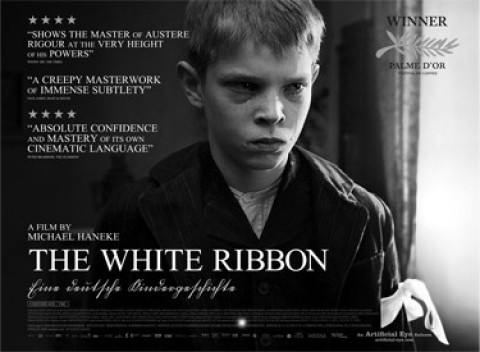
The White Ribbon / Das weisse Band - Eine deutsche Kindergeschichte (2009)
The weight of expectation for a Palme d'Or winner is incredible, more so than with an Oscar winner or any other prize. The prestige attached to the Cannes prize is deserved too- would Driving Miss Daisy have won, or Crash, or Titanic, or Rocky, or My Fair Lady? The only undeserving winner I can think of is Richard Lester's 'The Knack... And How To Get It'. Forty-five years ago; I think I can forgive them that.
The reason I mention this is that the only two things I knew about the film going in was that Michael Haneke wrote and directed it and that it was a winner at Cannes. Plenty to live up to then. And it has taken me four days of reflection to collect my thoughts before noting them down.

I’m trying hard to avoid spoilers and only talk thematically and in abstract terms.
The film opens in austere monochrome (it appears almost sepia, however, which simply adds to the authentic-feeling historical context) in the year leading up to the declaration of the misleadingly-titled Great War. The film recounts a series of increasingly gruesome events in a relatively prosperous rural village but is neither whodunnit nor horror story- not in the conventional sense anyway. The film is a discourse on dependency and subservience and the breeding of resentment and of repression of dissent and the repercussions of all of these things and more. That the film is focused upon a group of children who would have been adults as the National Socialist party rose to power in Germany is, of course, pivotal to the theme. It is also crucial to bear in mind that it was made in a time when we have seen atrocities perpetrated by subservient extremists and those atrocities can be seen to have led to repression and victimisation of others in response.
The prosperity of the village I mentioned earlier is dependent upon The Baron- aside from the teenage Nanny, none of the adults are known by name only their title- and his patronage ensures that he is beyond reproach. When a farmer's wife is killed in an accident he dare not speak out against the Baron's Foreman for fear of losing his employment. His impetuous son, against the Farmer's instructions, does so leading to the ostracism of his entire family and his father's eventual suicide. The Baron acknowledges the Farmer's loyalty ("he would rather cut off his tongue than speak in defence of his son") and yet still strikes them down with ruthlessness and malice.
The same strict and unforgiving discipline is imposed by The Lutheran Pastor on his young children- and here I feel is the key relationship between the events of the film and the later events in the Germany of the 1930s. However well-intentioned or otherwise his discipline may be- and, like all else in the movie, this remains ambiguous- it breeds violent malcontent, hatred, victimisation and bullying. The scene in which he browbeats his teenage son and instils him a mortal fear in order to modify his behaviour is startling. The power he wields over the impressionistic teenager is abused in the most cruel of ways. In such circumstances, even the kind hearts of children (the tenderest moment in The White Ribbon occurs when The Pastor is touched deeply by an act of generosity from his youngest child) can and do turn sour.
In such circumstances, evil breeds. Incest, bullying, violence, emotional abuse, animal cruelty and even murder are hushed-up or accepted within the village. The corruption of the collective soul of a group of people has rarely been more starkly depicted. The deliberate, painstaking narrative and beautiful yet harrowing direction allow the Auteur to weave complex and challenging themes around a few key events. It is a masterful film with Haneke eliciting superb performances from a largely juvenile cast to tell a simple tale which builds in depth and meaning relentlessly from first to last.
The first victim of the horrifying events of the film is the Doctor and immediately he is presented as a figure evoking sympathy when he returns to the village midway through the film. Being the village’s Doctor and returning in response to his devoted infant son’s attempt to walk from the village to find him obviously strengthens the impression. But, of course, things in Haneke’s film are far from this simple and the sympathy we feel for the Doctor dissipates as we learn more about his personality, behaviours and lifestyle. Where the Pastor's cruel verbal abuse of his son can at least be understood if not accepted, the Pastor's no less abhorrent treatment of the midwife is less easily explicable. The control he wields within his household is akin to the Baron’s authoritarianism within the community, allowing him to perform the grossest acts without fear of either retribution or even mute defiance. His unchecked autonomy is treated as an invitation to test the limits of his capacity to inflict suffering- is there no limit to the things that these people will allow? And again we are compelled to reflect upon the film in relation to the grotesque human atrocities of the past century and this one.
I spoke earlier about the film being a whodunnit and that remains the case - the audience are told explicitly from the outset that these are the Schoolteacher’s recollections of events which- it transpires- are unresolved. That ambiguity paints up a very clear question which speaks for the whole moral context of the piece- who is to blame? Can we blame the Baron for acting with impunity when no-one dares challenge him? Can we blame the villagers for their subservience when he strikes with the wrath of Jehovah? These crimes could be retaliatory or acts of transferred vengeance- where does the blame lie then? For such complex moral issues there are no easy answers and Haneke offers none, he merely poses the question. The village accepts the Baron’s tyranny and this begets misplaced retribution and a kind of mass tyranny perpetrated by the children. The sins they learn in the home are repeated and amplified within the village. Which returns us to the original context of these being the future adults of 1930s Germany; where do we apportion our blame then?
Magnificent. A film of incredible power. I was gobsmacked.
The reason I mention this is that the only two things I knew about the film going in was that Michael Haneke wrote and directed it and that it was a winner at Cannes. Plenty to live up to then. And it has taken me four days of reflection to collect my thoughts before noting them down.
I’m trying hard to avoid spoilers and only talk thematically and in abstract terms.
The film opens in austere monochrome (it appears almost sepia, however, which simply adds to the authentic-feeling historical context) in the year leading up to the declaration of the misleadingly-titled Great War. The film recounts a series of increasingly gruesome events in a relatively prosperous rural village but is neither whodunnit nor horror story- not in the conventional sense anyway. The film is a discourse on dependency and subservience and the breeding of resentment and of repression of dissent and the repercussions of all of these things and more. That the film is focused upon a group of children who would have been adults as the National Socialist party rose to power in Germany is, of course, pivotal to the theme. It is also crucial to bear in mind that it was made in a time when we have seen atrocities perpetrated by subservient extremists and those atrocities can be seen to have led to repression and victimisation of others in response.
The prosperity of the village I mentioned earlier is dependent upon The Baron- aside from the teenage Nanny, none of the adults are known by name only their title- and his patronage ensures that he is beyond reproach. When a farmer's wife is killed in an accident he dare not speak out against the Baron's Foreman for fear of losing his employment. His impetuous son, against the Farmer's instructions, does so leading to the ostracism of his entire family and his father's eventual suicide. The Baron acknowledges the Farmer's loyalty ("he would rather cut off his tongue than speak in defence of his son") and yet still strikes them down with ruthlessness and malice.
The same strict and unforgiving discipline is imposed by The Lutheran Pastor on his young children- and here I feel is the key relationship between the events of the film and the later events in the Germany of the 1930s. However well-intentioned or otherwise his discipline may be- and, like all else in the movie, this remains ambiguous- it breeds violent malcontent, hatred, victimisation and bullying. The scene in which he browbeats his teenage son and instils him a mortal fear in order to modify his behaviour is startling. The power he wields over the impressionistic teenager is abused in the most cruel of ways. In such circumstances, even the kind hearts of children (the tenderest moment in The White Ribbon occurs when The Pastor is touched deeply by an act of generosity from his youngest child) can and do turn sour.
In such circumstances, evil breeds. Incest, bullying, violence, emotional abuse, animal cruelty and even murder are hushed-up or accepted within the village. The corruption of the collective soul of a group of people has rarely been more starkly depicted. The deliberate, painstaking narrative and beautiful yet harrowing direction allow the Auteur to weave complex and challenging themes around a few key events. It is a masterful film with Haneke eliciting superb performances from a largely juvenile cast to tell a simple tale which builds in depth and meaning relentlessly from first to last.
The first victim of the horrifying events of the film is the Doctor and immediately he is presented as a figure evoking sympathy when he returns to the village midway through the film. Being the village’s Doctor and returning in response to his devoted infant son’s attempt to walk from the village to find him obviously strengthens the impression. But, of course, things in Haneke’s film are far from this simple and the sympathy we feel for the Doctor dissipates as we learn more about his personality, behaviours and lifestyle. Where the Pastor's cruel verbal abuse of his son can at least be understood if not accepted, the Pastor's no less abhorrent treatment of the midwife is less easily explicable. The control he wields within his household is akin to the Baron’s authoritarianism within the community, allowing him to perform the grossest acts without fear of either retribution or even mute defiance. His unchecked autonomy is treated as an invitation to test the limits of his capacity to inflict suffering- is there no limit to the things that these people will allow? And again we are compelled to reflect upon the film in relation to the grotesque human atrocities of the past century and this one.
I spoke earlier about the film being a whodunnit and that remains the case - the audience are told explicitly from the outset that these are the Schoolteacher’s recollections of events which- it transpires- are unresolved. That ambiguity paints up a very clear question which speaks for the whole moral context of the piece- who is to blame? Can we blame the Baron for acting with impunity when no-one dares challenge him? Can we blame the villagers for their subservience when he strikes with the wrath of Jehovah? These crimes could be retaliatory or acts of transferred vengeance- where does the blame lie then? For such complex moral issues there are no easy answers and Haneke offers none, he merely poses the question. The village accepts the Baron’s tyranny and this begets misplaced retribution and a kind of mass tyranny perpetrated by the children. The sins they learn in the home are repeated and amplified within the village. Which returns us to the original context of these being the future adults of 1930s Germany; where do we apportion our blame then?
Magnificent. A film of incredible power. I was gobsmacked.
Monday, 14 December 2009
Performance (1970)
For a long time during my teens I nurtured a probably unhealthy obsession with Brian Jones the result of which has been a weaning-off process causing me to lock away my library of 'was Brian murdered?' books (of course he was) and avoid seeing this for the better part of two decades. Seeing Mick play- to all intents and purposes- Brian opposite the girl Keith stole from Brian was always going to be a bit weird. That the film is an almost total headfuck anyway, didn't help matters.
Performance could be the ultimate Emperor's New Clothes movie. It could be a trippy, surreal but ultimately vacuous exercise in style over content from which unintended layers of meaning and allusion can be divined. It could be Chauncey Gardiner as a film, I'm absolutely aware of that. But I'm going to follow my instinct that it isn't. And, furthermore, even if it is I'm going to say that the allegorical nature of the film is no less valid if it is unintentional anyway. Why should it be?
The film opens in the brutal world of London gangsters with Chas (an utterly fantastic James Fox performance) and we get about half an hour of a fast-paced gritty crime drama in the vein of Get Carter or Villain but then suddenly lurches head-first into a psychedelic acid nightmare full of "long-hairs, druggers, beatniks and foreigners" blurring the lines between reality and surreality. In exactly the same way that Chas gets discombobulated by what he experiences, so does the viewer. The resulting confusion is deliberate as the two worlds are shown as more similar than they are different. The integration of the two worlds occurs by allusion during the magnificent 'Memo From Turner' sequence and then in actuality.

The blending of identities and merging of entities is a recurrent theme. Chas and Turner, the hedonistic rock star in seclusion played by Mick Jagger, are increasingly shown as similar below their surface differences, they could almost be a masculine and feminine version of the same person. That duality is expressed in many ways; both literally (swapping styles of dress, superimposed faces etc) and by suggestion ("there's nothing wrong with me...I'm normal"). In fact the whole film investigates this identity confusion: there are mirrors and juxtaposed faces, picture disappear from frames between shots, sexual confusion, androgyny, altered perceptions, sanity and insanity, domination and submission, appearance changes and role swapping. Throughout the gangland scenes the phrase "it's not a takeover, it's a merger" is repeated and, in the end, we are presented with the surreal merging of people- Turner becomes Lucy, Chas becomes Turner, Turner becomes Chas. This bizarre distillation of Borgesian confusion is both challenging and illuminating.
As a film, as a piece of entertainment, I would imagine that Performance might be considered a failure. There is no obvious hero or villain, no linear narrative, no clear outcome and the performances range from Fox's coruscating portrayal of Chas to Pallenberg's patchy and uneven Pherber. As a work of art, however, it is outstanding. And the soundtrack is incredible.
And- finally- everyone should own a copy of Happy Mondays' Bummed which samples this film's dialogue heavily.
Performance could be the ultimate Emperor's New Clothes movie. It could be a trippy, surreal but ultimately vacuous exercise in style over content from which unintended layers of meaning and allusion can be divined. It could be Chauncey Gardiner as a film, I'm absolutely aware of that. But I'm going to follow my instinct that it isn't. And, furthermore, even if it is I'm going to say that the allegorical nature of the film is no less valid if it is unintentional anyway. Why should it be?
The film opens in the brutal world of London gangsters with Chas (an utterly fantastic James Fox performance) and we get about half an hour of a fast-paced gritty crime drama in the vein of Get Carter or Villain but then suddenly lurches head-first into a psychedelic acid nightmare full of "long-hairs, druggers, beatniks and foreigners" blurring the lines between reality and surreality. In exactly the same way that Chas gets discombobulated by what he experiences, so does the viewer. The resulting confusion is deliberate as the two worlds are shown as more similar than they are different. The integration of the two worlds occurs by allusion during the magnificent 'Memo From Turner' sequence and then in actuality.
The blending of identities and merging of entities is a recurrent theme. Chas and Turner, the hedonistic rock star in seclusion played by Mick Jagger, are increasingly shown as similar below their surface differences, they could almost be a masculine and feminine version of the same person. That duality is expressed in many ways; both literally (swapping styles of dress, superimposed faces etc) and by suggestion ("there's nothing wrong with me...I'm normal"). In fact the whole film investigates this identity confusion: there are mirrors and juxtaposed faces, picture disappear from frames between shots, sexual confusion, androgyny, altered perceptions, sanity and insanity, domination and submission, appearance changes and role swapping. Throughout the gangland scenes the phrase "it's not a takeover, it's a merger" is repeated and, in the end, we are presented with the surreal merging of people- Turner becomes Lucy, Chas becomes Turner, Turner becomes Chas. This bizarre distillation of Borgesian confusion is both challenging and illuminating.
As a film, as a piece of entertainment, I would imagine that Performance might be considered a failure. There is no obvious hero or villain, no linear narrative, no clear outcome and the performances range from Fox's coruscating portrayal of Chas to Pallenberg's patchy and uneven Pherber. As a work of art, however, it is outstanding. And the soundtrack is incredible.
And- finally- everyone should own a copy of Happy Mondays' Bummed which samples this film's dialogue heavily.
Sunday, 13 December 2009
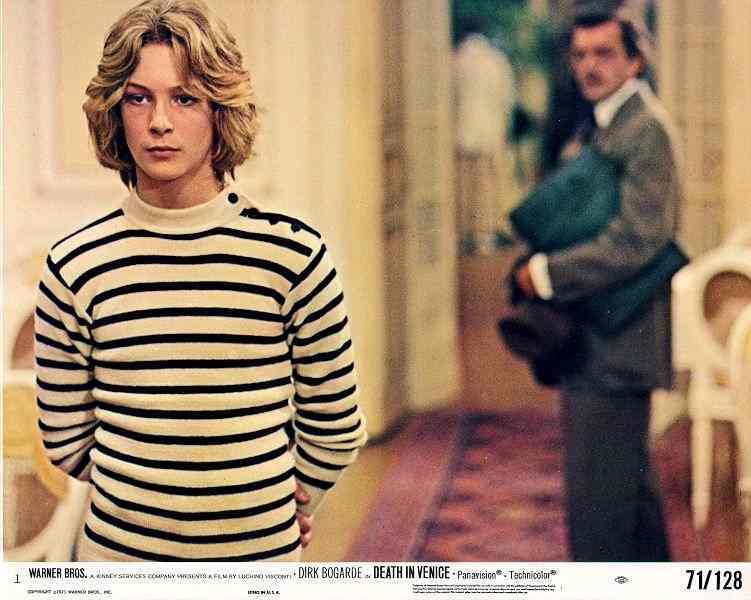
Death in Venice / Morte a Venezia (1971)
After a few popcorn movies in a row, I felt that I owed it to my brain to give it a little workout and Visconti’s meditation on mortality and beauty and decay is designed for exactly that purpose. This film is beautifully shot and artfully constructed, languorous and melancholic- the deliberate pace compels the viewer to consider the subtext carefully. The first five minutes, more or less, is dedicated to wordless shots of Dirk Bogarde sat uncomfortably and clearly troubled on a steamboat. Five minutes! It is a beautiful, elegiac composition and to see Bogarde in the condition that he is already opens up the suggestion of the withering influence of time. My first thought upon seeing him looks more like Ronnie Corbett dressed as a rather shabby Hercule Poirot than the handsome movie star I’m accustomed to seeing. The fact that, at this point, my only knowledge of the film was its title did serve to disconcert me a little- for all I knew I may be about to watch a broad farce in the vein of Without A Clue. Of course, broad farces do not tend to begin with a contemplative stretches of silence and so the misapprehension was pretty swiftly dismissed.

In fact, I worked through several theories during the watching of this film. Following this opening, Bogarde is taken on to his final destination by a gondolier who refuses all requests and instructions to change course and is later described as a criminal who only goes one way. Immediately I was put in mind of Charon, the mythological ferryman who transports the newly deceased from the world of the living unto the world of the dead (again, the title Death in Veniceis resonant here). The film also appears to show Bogarde developing a homo-erotic infatuation with a pretty long-haired boy, Tadzio (Björn Andrésen), who is dressed throughout in sailor outfits or period- 1912- swimming outfits. Through flashbacks we gradually learn of the circumstances leading to Bogarde’s arrival. What I liked about this- and had never actually occurred to me until I considered it watching this film- is that the memories are haphazardly presented, jumbled in order almost non-sequiturs in themselves until the context is revealed during the course of the film. Isn’t that exactly what memories are like? Where else but in the movies do your inner reflections follow a chronological pattern?
And so we come to understand that Bogarde’s character Professor Gustav von Aschenbach (I’m not typing all that again!) arrives in Venice in failing health for rehabilitation. He has been married with a child who died. His reputation as a composer is tarnished by recent failings and his creative and personal standing is at a low ebb. A broken man who appears lost in the world of his choosing as he questions the validity of his existence of his works. He dissects his art and the nature of creativity (is beauty the result of labour or inspiration? Is it discovered or developed?) without conclusion. He seems unconvinced by his own assertion that “reality distracts and degrades us” and unconvinced by the counter-arguments in equal measure.

With this in mind the film is revealed to not be about homo-erotic, generation-defying infatuation but about a deeper admiration for , actually an infatuation with, youth itself and with pure beauty. And then I return to the idea of Charon the Ferryman, transferring the dead from the world of the living. As Bogarde feels the crushing realisation that his vapid emotionless world of intellect is dead he moves on to a world of natural beauty which renders everything else contrived and worthless. Bogarde’s infatuation is not so much with Tadzio himself but with that which he represents. The inspired beauty that Bogarde longed to create but could not is natural and real, neither the product of inspiration nor perspiration. Dirk Bogarde conveys this beautifully. His performance, increasing in intensity and overt angst is measured and balanced. His flappable frustration giving way to confusion, then to fear, then realisation and finally to impotent surrender are rendered with very few words and no grand physical gestures but with, for example, an expression of horror as he learns the truth about the cholera epidemic or the way in which he grabs his arms around himself to chastise himself for daring to smile as Tadzio. Tremendous performance
Even more than Bogarde who dominates the film to the extent that he is in every scene and almost every shot, however, the film is a magnificent achievement by the director/cinematographer team of Luchino Visconti and Pasqualino De Santis. The slow and largely wordless nature of the film place a heavy burden upon the pair. The use of Mahler’s music (is there meant to be a link between Gustav Mahler and Gustav von Aschenbach? I don’t know anything about the composer and may be clutching a very tenuous straw) beautifully complements the stunning visual feast of the film- and it is a feast. One of the themes running through the film is of decay and the corrupting effect of time and this is beautifully demonstrated in a city which is presented as a deteriorating before our eyes. The whole thing is quite stunning and nothing is left unsaid.
This is a marvellous picture, high art indeed. And, while I would prefer to watch Carry On Don’t Lose Your Head nine times out of ten, when I feel the need to challenge myself then Death In Venice would be an excellent choice.
In fact, I worked through several theories during the watching of this film. Following this opening, Bogarde is taken on to his final destination by a gondolier who refuses all requests and instructions to change course and is later described as a criminal who only goes one way. Immediately I was put in mind of Charon, the mythological ferryman who transports the newly deceased from the world of the living unto the world of the dead (again, the title Death in Veniceis resonant here). The film also appears to show Bogarde developing a homo-erotic infatuation with a pretty long-haired boy, Tadzio (Björn Andrésen), who is dressed throughout in sailor outfits or period- 1912- swimming outfits. Through flashbacks we gradually learn of the circumstances leading to Bogarde’s arrival. What I liked about this- and had never actually occurred to me until I considered it watching this film- is that the memories are haphazardly presented, jumbled in order almost non-sequiturs in themselves until the context is revealed during the course of the film. Isn’t that exactly what memories are like? Where else but in the movies do your inner reflections follow a chronological pattern?
And so we come to understand that Bogarde’s character Professor Gustav von Aschenbach (I’m not typing all that again!) arrives in Venice in failing health for rehabilitation. He has been married with a child who died. His reputation as a composer is tarnished by recent failings and his creative and personal standing is at a low ebb. A broken man who appears lost in the world of his choosing as he questions the validity of his existence of his works. He dissects his art and the nature of creativity (is beauty the result of labour or inspiration? Is it discovered or developed?) without conclusion. He seems unconvinced by his own assertion that “reality distracts and degrades us” and unconvinced by the counter-arguments in equal measure.
With this in mind the film is revealed to not be about homo-erotic, generation-defying infatuation but about a deeper admiration for , actually an infatuation with, youth itself and with pure beauty. And then I return to the idea of Charon the Ferryman, transferring the dead from the world of the living. As Bogarde feels the crushing realisation that his vapid emotionless world of intellect is dead he moves on to a world of natural beauty which renders everything else contrived and worthless. Bogarde’s infatuation is not so much with Tadzio himself but with that which he represents. The inspired beauty that Bogarde longed to create but could not is natural and real, neither the product of inspiration nor perspiration. Dirk Bogarde conveys this beautifully. His performance, increasing in intensity and overt angst is measured and balanced. His flappable frustration giving way to confusion, then to fear, then realisation and finally to impotent surrender are rendered with very few words and no grand physical gestures but with, for example, an expression of horror as he learns the truth about the cholera epidemic or the way in which he grabs his arms around himself to chastise himself for daring to smile as Tadzio. Tremendous performance
Even more than Bogarde who dominates the film to the extent that he is in every scene and almost every shot, however, the film is a magnificent achievement by the director/cinematographer team of Luchino Visconti and Pasqualino De Santis. The slow and largely wordless nature of the film place a heavy burden upon the pair. The use of Mahler’s music (is there meant to be a link between Gustav Mahler and Gustav von Aschenbach? I don’t know anything about the composer and may be clutching a very tenuous straw) beautifully complements the stunning visual feast of the film- and it is a feast. One of the themes running through the film is of decay and the corrupting effect of time and this is beautifully demonstrated in a city which is presented as a deteriorating before our eyes. The whole thing is quite stunning and nothing is left unsaid.
This is a marvellous picture, high art indeed. And, while I would prefer to watch Carry On Don’t Lose Your Head nine times out of ten, when I feel the need to challenge myself then Death In Venice would be an excellent choice.
Wednesday, 14 January 2009
Let The Right One In / Låt den rätte komma in (2009)
It is pretty rare for me to watch a horror film, so watching two vampire films in succession is almost unheard of (almost because I once watched the Hammer Dracula movies on consecutive nights). But the two films are special cases, haunting works of art. As I said last night, I'm a bit reticent to bang on about yet another great movie I've seen- in my head I sound like one of those tabloid reviewers who call every other film 'the best action/comedy/drama/love/war/horror film of the year' just to get their name on the billboards' (don't get me wrong, I don't want any fucker quoting me, but I'm wary of sounding trite). But this is one of the great film experiences of the decade- I'm convinced of that after a single viewing. Seriously, this is a film which is so good that I'm terrified of giving anything away and causing even the slightest hint of spoiling the film. I'm very reverent about this film.
What I can say is that Kåre Hedebrant as Oskar (looking like a twelve-year old Danny Torrance from 'The Shining' in a great haircut) and Lina Leandersson as Eli perform wonderfully at the centre of the movie and they are surrounded by magnificent support actors who bring life and individuality to small parts which would be nondescript in a lesser movie. The film looks wonderful, the soundtrack is superb (even the song by the bloke from Roxette is impressive) and the script never fails to intrigue or engage. Tomas Alfredson as Director must take the plaudits for a film which says more in under two hours about the human condition, love, responsibility, pain, confusion, expectation, devotion and death than you have any right to expect from a horror film. And this truly is so much more than that- it is a coming of age film, a genuinely life-affirming romance, a dark commentary on childhood and an exploration of the morality of revenge. Shit, it has everything except belly-laughs.
I'm not saying any more, I can't. As soon as you get the chance, see it. If this film isn't the best of the year, then I may not live through the one that beats it. 10/10- easily.
What I can say is that Kåre Hedebrant as Oskar (looking like a twelve-year old Danny Torrance from 'The Shining' in a great haircut) and Lina Leandersson as Eli perform wonderfully at the centre of the movie and they are surrounded by magnificent support actors who bring life and individuality to small parts which would be nondescript in a lesser movie. The film looks wonderful, the soundtrack is superb (even the song by the bloke from Roxette is impressive) and the script never fails to intrigue or engage. Tomas Alfredson as Director must take the plaudits for a film which says more in under two hours about the human condition, love, responsibility, pain, confusion, expectation, devotion and death than you have any right to expect from a horror film. And this truly is so much more than that- it is a coming of age film, a genuinely life-affirming romance, a dark commentary on childhood and an exploration of the morality of revenge. Shit, it has everything except belly-laughs.
I'm not saying any more, I can't. As soon as you get the chance, see it. If this film isn't the best of the year, then I may not live through the one that beats it. 10/10- easily.
Subscribe to:
Posts (Atom)